


Non-surgical rhinoplasty is a cosmetic procedure aimed at correcting minor defects in the shape and contour of the nose without the use of surgical methods.You should be aware of the results that can be achieved with this technique.All serious defects, a curvature of the nasal septum or a reduction in the size of the nose - all this is the domain of surgical corrective cosmetology.
Procedural options
Modern plastic surgery offers a wide range of methods for correcting both serious and subtle defects.The search for solutions to such problems began a long time ago.New tools are constantly being developed.Older methods are disappearing from the arsenal of practicing beauticians and plastic surgeons.
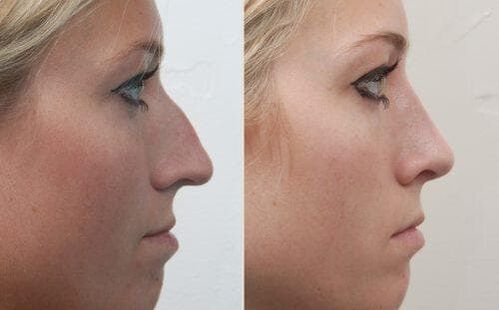
Nowadays, rhinoplasty can be performed without surgery using the following methods:
- fillers.
- Topics.
- Hormonal medications.
- Longuet.
The choice of one or another method of changing the shape of the nose without surgery depends on a variety of factors.First, you need to clearly define your goals, specifically describe the defect of interest and the desired result.The doctor selects (if possible) the most effective method of non-surgical rhinoplasty.
A detailed medical history is taken, the presence of any hypersensitivity reactions to certain drugs and information about concomitant illnesses is recorded.Based on the synthesis of all the information received, a decision is made on the tactics of treating the problem.Non-surgical rhinoplasty allows solving a relatively large number of problems, but is not a radical method.
This has several reasons:
- the methods used are only able to correct small defects;
- Most of the proposed options have a temporary effect, that is, they require repeated manipulations.
However, there are also enormous advantages over surgical methods.This also applies to the duration of the procedure, which rarely lasts longer than half an hour.And a very short recovery period (a few days maximum).Correcting defects does not involve any significant pain.
A separate indication for non-surgical rhinoplasty is the correction of certain “defects” that could not be changed by plastic surgery.
Application of fillers
The term “filler” refers to special substances used in a procedure called “nose contouring.”Currently there are two major groups of fillers: absorbable and non-absorbable.However, more and more people are deviating from the latter group.
The most important fillers are:
- Preparations based on hyaluronic acid.
- Preparations based on collagen of different origins.
- Preparations based on mineral compounds – calcium hydroxyapatite.
- Preparations based on artificially synthesized organic substances.
- Non-absorbable fillers: silicone implants and lipofilling.
The correction of the shape of the nose using fillers is carried out as follows:
- the problem area is assessed based on a number of parameters;
- the most appropriate correction method is selected;
- The filler is injected to the desired depth using a special needle.
The amount of the substance administered is completely sufficient to correct minor defects in the soft tissue and cartilaginous skeleton.In most cases, the procedure is preceded by local anesthesia.For this purpose, a so-called local anesthesia is used (a special gel with a local anesthetic is applied to the skin of the nose, bridge of the nose and adjacent areas).
After 30 minutes, the skin's sensitivity to pain is completely lost.After completing the main phase of the procedure, it is recommended to wear a special splint for 24-48 hours, which will prevent the filler from moving and causing unnecessary trauma.
Despite the fact that non-surgical rhinoplasty is performed very quickly, you should adhere to a number of rules within 14 days to avoid unwanted effects and consolidate the result:
- Do not expose yourself to elevated temperatures either locally or generally.You should definitely avoid visiting the bathhouse, sauna and solarium.
- Stay in the sun as little as possible.And if necessary, use sunscreen.
- Any mechanical impact on the nasal area (cosmetic manipulation, massage) is strictly prohibited.
- Avoid consuming alcohol, whose breakdown products in the body can interact with the filler and destroy its shape.
Hyaluronic acid and collagen
Hyaluronic acid is one of the main components of the intercellular substance of connective tissue, including skin.It gives it properties such as elasticity and suppleness.
This is due to the structure of the molecule of this acid: there are a large number of hydrophilic (water-attracting) branches that saturate the injection site with liquid.After the hyaluronic acid penetrates the skin layer, water molecules accumulate, which lead to a slight local increase in volume of the treated tissue.
This is the basis for the use of these drugs, which allow you to change the shape of the nose without surgery.Considering that the drugs in this group are in the form of a gel, which can be given the necessary properties immediately after administration, this allows the cosmetologist to give the nose the necessary shape.
Immediately after the drug is administered into the skin, there will be a slight swelling of the tissues.A small hematoma may form.In most cases, these side effects are subtle and hardly noticeable.Usually the swelling disappears completely within 4-7 days without leaving any traces.
Contraindications to the administration of hyaluronic acid preparations are:
- inflammatory processes in the injection area;
- infectious diseases;
- Diseases associated with reduced blood clotting;
- severe diabetes mellitus of any kind;
- Pregnancy and breastfeeding.
Another type of filler is collagen-containing supplements.This is also a normal component of the skin that gives it strength and elasticity.Normally it is produced by connective tissue cells - fibroblasts, but with age, “aging” of this substance occurs and the skin loses its former properties.
Collagen, which reduces visible skin defects, can come from cattle or humans.Preference should be given to the second, since bovine protein is a foreign substance and much more often causes side effects (severe swelling, pain, itching, burning, rejection and suppuration).Therefore, in order to avoid unexpected reactions, an allergy test must be carried out before administering drugs based on bovine collagen.
A variety of products have been developed based on human collagen that allow rhinoplasty to be performed without surgery.These drugs have an undeniable advantage.Human collagen does not have such a pronounced reactogenic activity in relation to the immune system and can therefore be used without prior allergy testing.
Each of the preparations based on human collagen has certain properties.Correction of the nose without surgery is carried out with these drugs according to the same principle as with substances containing hyaluronic acid.
Hormonal medications
The most commonly used synthetic analogues of adrenal hormones are glucocorticoids.It has been found that these hormonal medications can cause destruction of soft and cartilage tissue at the site of administration.This corrects small bumps on the nose.
However, the use of this group of medications takes several weeks and requires the utmost care and steadfastness of the doctor's hand, because an incorrectly selected dose or incorrect administration of the medication can make the defect even more noticeable.
It should also be taken into account that hormonal drugs have a number of special contraindications.They should not be administered in the presence of local inflammation or active herpetic process, severe diabetes mellitus or other infectious disease.In addition, glucocorticoids should not be administered for fungal infections.This is because hormones suppress those immune reactions that normally inhibit the development of pathogenic fungi.
Taking hormonal drugs during pregnancy and breastfeeding is strictly prohibited, as these substances can penetrate the placental barrier and get into milk.
cosmetic threads
A technique for using cosmetic threads has been developed, which is based on introducing thread-like structures into the skin and with their help tightening the necessary areas.This method allows you to lift the tip of the nose that is too bent down and correct the contours of the wings and bridge of the nose.
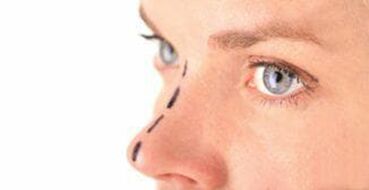
There are several important points in the effect of cosmetic threads:
- Over time, the threads dissolve, allowing for subsequent correction (if necessary).
- Since the thread is a foreign body, a natural reaction occurs when it penetrates into the internal environment of the body - the development of connective tissue.This tissue remains intact even after the thread has been taken up.This means the effect lasts for a long time and in some cases even forever.
- The material from which they are made does not cause allergic reactions.
It is important that cosmetic threads can significantly change the nasal contour (profile) without surgical intervention.This cannot be achieved with other methods of rhinoplasty.
Despite all the advantages, the use of threads can cause some complications:
- Suppuration;
- insufficient inflammatory response;
- thread breakage;
- curvature of the nose.
Creating rails
The splint is a plastic device that is selected and designed according to individual needs.This device allows you to reduce the size of your nose and slightly change its shape without surgery.
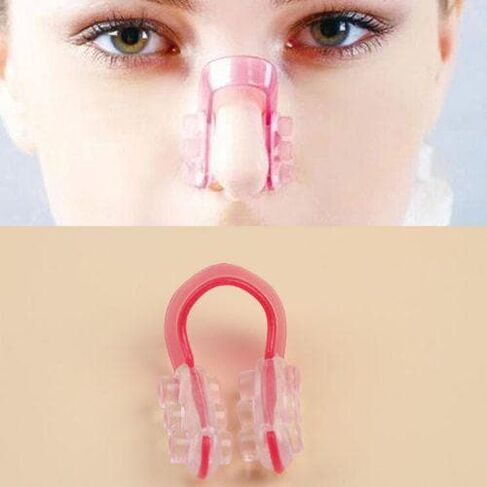
A significant advantage of this method is that there is no need to damage the skin, which completely eliminates the possibility of infection.The disadvantage is that you have to wear the splints for a long period of time.A noticeable effect may only appear after a few months.
If the reflection in the mirror is not always satisfactory, but there is no desire for surgery, modern cosmetic science can offer many methods for correcting minor defects.